


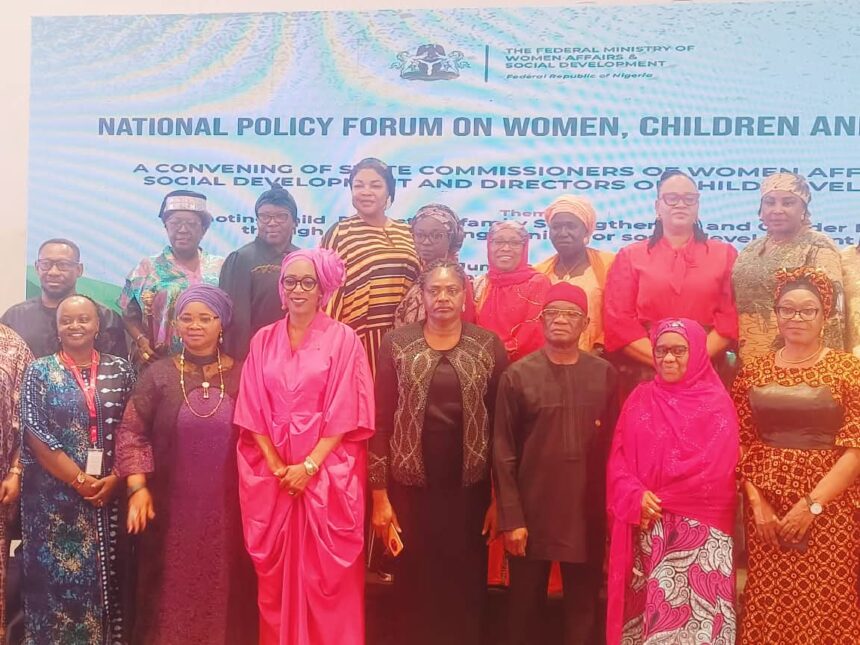
The Federal Government has convened a high-level stakeholders’ meeting aimed at strengthening child protection and family welfare systems across Nigeria through the review and validation of key policy frameworks and international reports.
The four-day meeting, organized by the Federal Ministry of Women Affairs and Social Development and holding from June 15 to 19, 2026, at the Abuja Continental Hotel, brings together State Commissioners of Women Affairs and Social Development, development partners, civil society organizations, and child-focused institutions.
The gathering is reviewing and validating several strategic documents, including Nigeria’s Draft 5th–8th Combined Periodic Reports to the United Nations Committee on the Rights of the Child, the 2007 National Child Policy, the Child Protection and Child Well-being Index, Guidelines for the Re-certification of Child Adoption Services, and the Global Charter on Children’s Care Reform.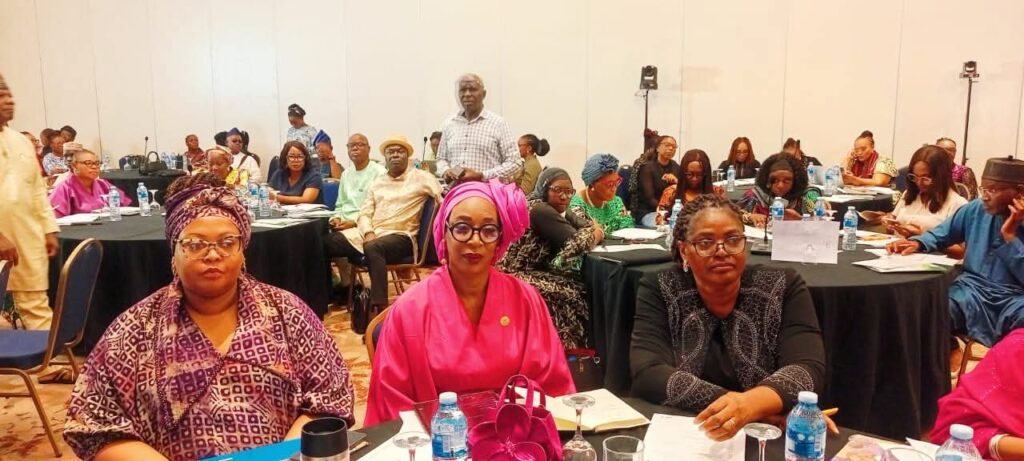
Speaking at the opening ceremony, the Permanent Secretary of the Federal Ministry of Women Affairs and Social Development, Mrs. Esuabana Nko Asanye, who represented the Honourable Minister, Hajiya Imaan Suleiman-Ibrahim, FSI, said the meeting reflects the Federal Government’s commitment to promoting the rights and welfare of women, children, families, and vulnerable groups.
She noted that the documents under review would play a critical role in shaping future interventions, strengthening protection systems, and improving service delivery across the country.
According to her, the quality of deliberations and recommendations generated during the meeting will determine the effectiveness of future policies and programmes designed to protect vulnerable populations and advance social development.
Mrs. Asanye also called on participants to contribute practical insights that reflect the realities and priorities of communities across Nigeria.
Development partners at the forum commended the Ministry for its leadership in advancing child protection reforms.
Speaking on behalf of UNICEF Nigeria, Mona Aika, Officer-in-Charge and Chief Child Protection Officer, stressed the importance of building strong systems capable of translating policies into services that reach communities and provide support for children and families in need.
She reaffirmed UNICEF’s commitment to supporting government efforts aimed at building an inclusive, coordinated, and accountable social development system.
Similarly, the Deputy Country Director and Director of Programme Development and Quality of Save the Children International Nigeria, Jane Mbagi Mutua, called for greater investment in child protection systems, noting that millions of Nigerian children still face challenges such as violence, abuse, neglect, poverty, displacement, climate-related shocks, and emerging digital threats.
She emphasized that the true measure of progress lies not in policy development alone but in the positive impact such policies have on the lives of children.
Also speaking, Chief Business Development Officer of SOS Children’s Villages Nigeria, Mark Nwakaudu, described the policy review process as a significant step towards strengthening child protection and care systems nationwide.
He highlighted the importance of the Global Charter on Children’s Care Reform and urged stakeholders to support efforts aimed at ensuring that every child grows up in a safe and nurturing family environment.
Representing State Commissioners of Women Affairs and Social Development, Mrs. Amina Abdullahi-Sani urged participants to engage actively in the validation process, noting that the outcomes would shape future policies affecting women, children, persons with disabilities, and other vulnerable groups.
The meeting is expected to produce actionable recommendations that will strengthen child protection systems, promote family-based care, enhance social welfare services, improve accountability, and ensure that Nigeria’s policies remain responsive to emerging social challenges.
Stakeholders at the forum reaffirmed their collective commitment to building a more inclusive, equitable, and protective society where every child is protected, every family is supported, and every vulnerable person is given the opportunity to thrive.