

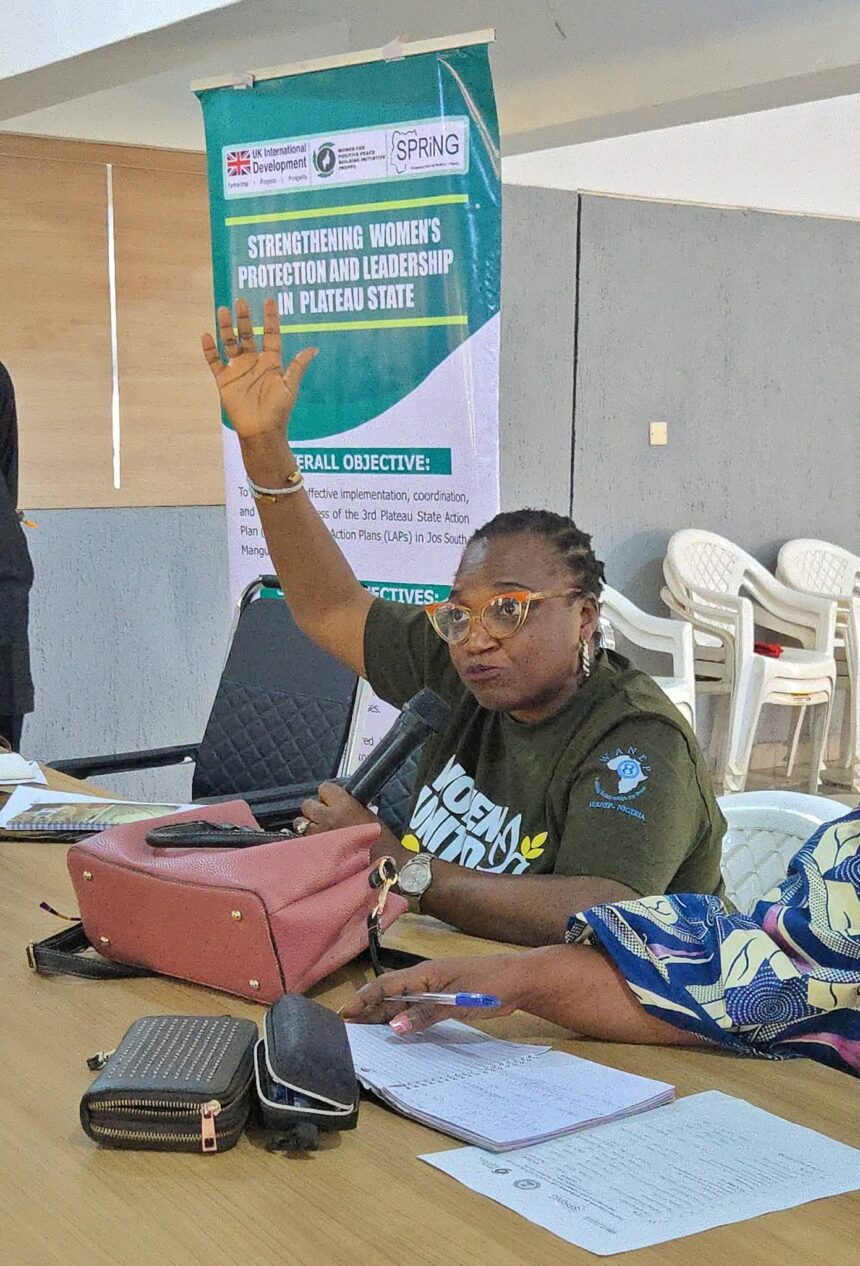
Plateau State has intensified efforts to strengthen institutional capacity for the implementation of the Women, Peace and Security (WPS) agenda through a one-day capacity-building workshop for members of the State Action Plan Implementation Committee (SAPIC).
The workshop, themed “Strengthening Institutional Capacity for the Implementation of the Women, Peace and Security Agenda in Plateau State,” was facilitated by Amina Bello-Akano, GEDSI/Technical Lead for Women, Peace and Security and Youth, Peace and Security (WPS/YPS) at the SPRiNG Programme.
The engagement provided an opportunity for SAPIC members to review their roles, responsibilities and governance structure, particularly in driving the implementation of Plateau State’s commitments to the WPS agenda.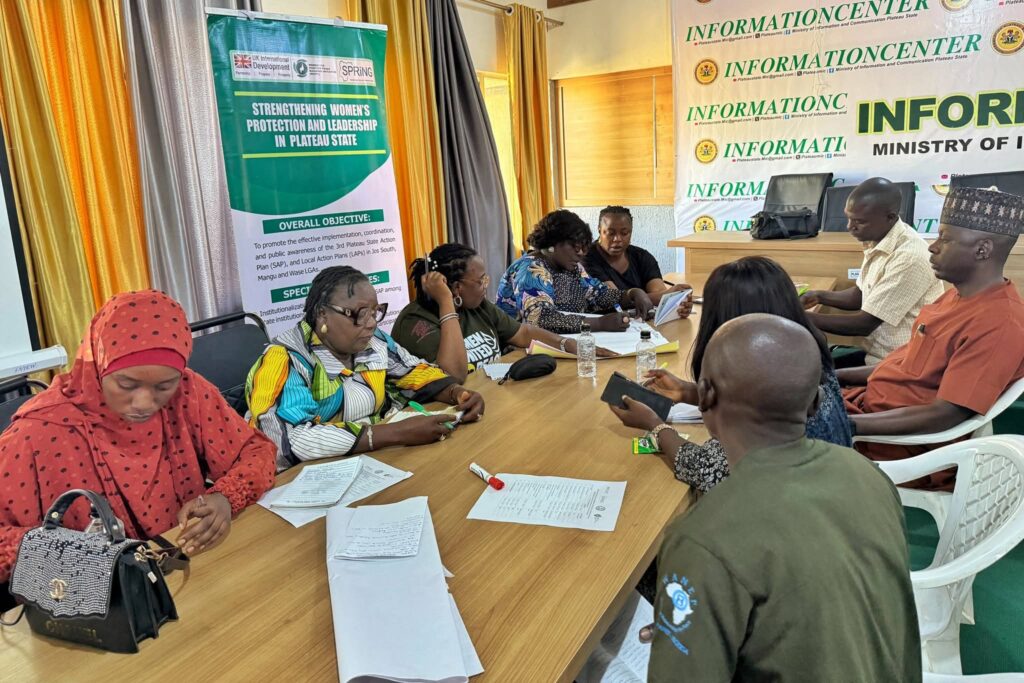
Discussions centred on the committee’s institutional mandate, operational guidelines, coordination mechanisms, the four pillars of WPS, costed sectoral workplans and the need to leverage existing structures to strengthen responses to Sexual and Gender-Based Violence (SGBV) and Conflict-Related Sexual Violence (CRSV).
Participants identified persistent challenges undermining efforts to address SGBV in the state, including the culture of silencing and shaming survivors, weak coordination among response actors and the absence of functional Gender-Based Violence (GBV) centres across the state.
Concerns were also raised over the limited coverage of the state’s two Sexual Assault Referral Centres, which participants noted were inadequate to meet the needs of survivors across Plateau State.
The workshop consequently underscored the need for stronger institutional collaboration, improved documentation, effective referral pathways and coordinated response mechanisms to ensure survivors have access to the necessary protection and support services.
Participants also expressed concern over the limited representation of women in decision-making processes, observing that many women remain at the level of participation without progressing to meaningful influence, leadership and decision-making.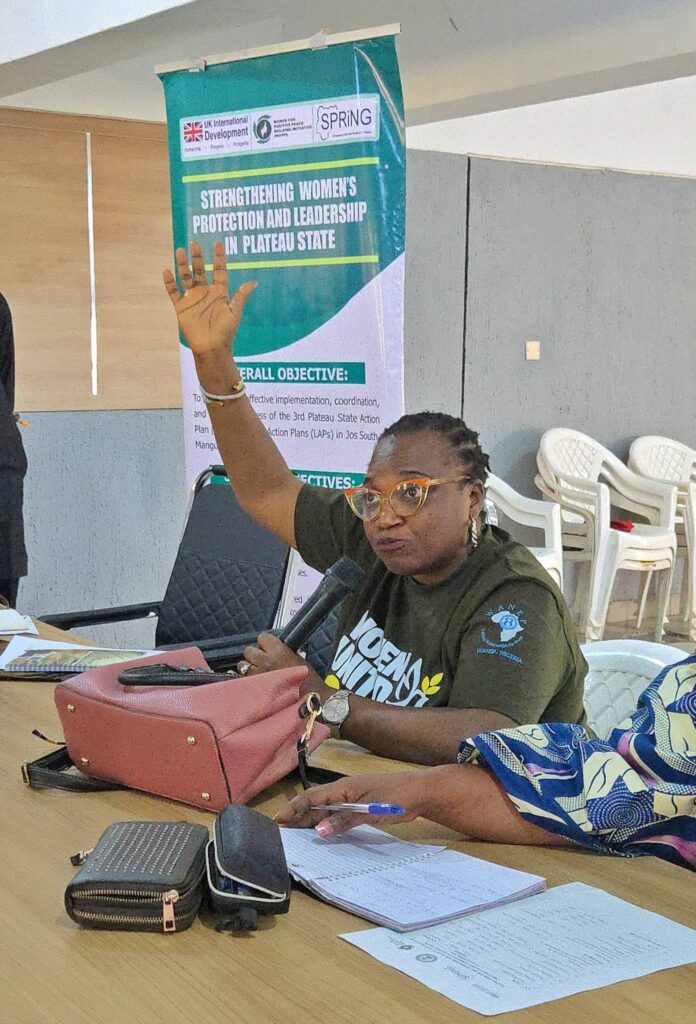
Despite these challenges, participants expressed optimism that the progress made in establishing and strengthening WPS structures represents a significant milestone in addressing the historical exclusion of women from peace and security processes.
The workshop reaffirmed the importance of a functional, coordinated and accountable SAPIC in translating policy commitments into practical interventions that promote women’s meaningful participation, protection and leadership in peacebuilding and security processes across Plateau State.