


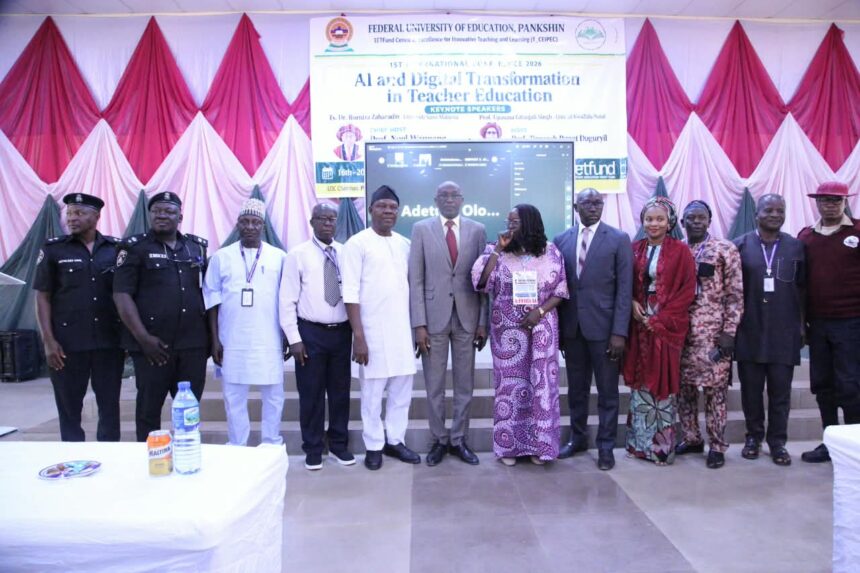
The 1st International Conference on Artificial Intelligence (AI) and Digital Transformation in Teacher Education, hosted by the TETFund Centre of Excellence for Innovative Teaching and Learning (T_CEIPEC), Federal University of Education, Pankshin (FUEP), has called for stronger digital infrastructure, improved AI literacy and ethical technology use in Nigeria’s teacher education system.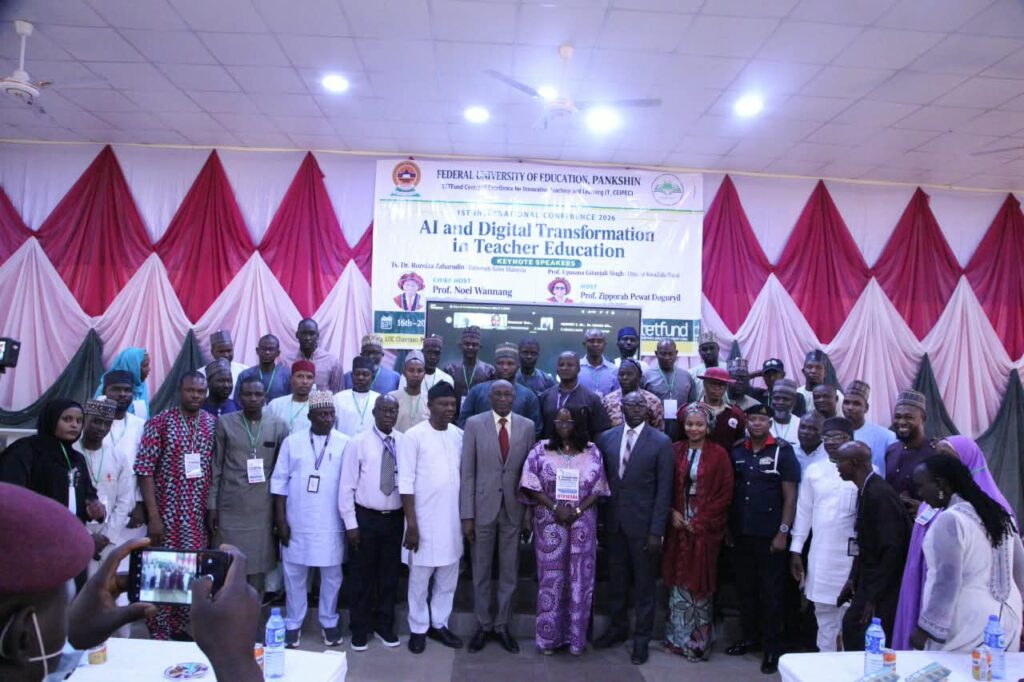
The call was contained in a communiqué issued at the end of the five-day international conference held from November 16 to 20, 2026, at the university’s remodelled lecture hall, with virtual participation.
The conference, which brought together researchers, teacher educators, policymakers, librarians and students from Nigeria and abroad, featured keynote and lead-paper presentations from experts in Malaysia and South Africa.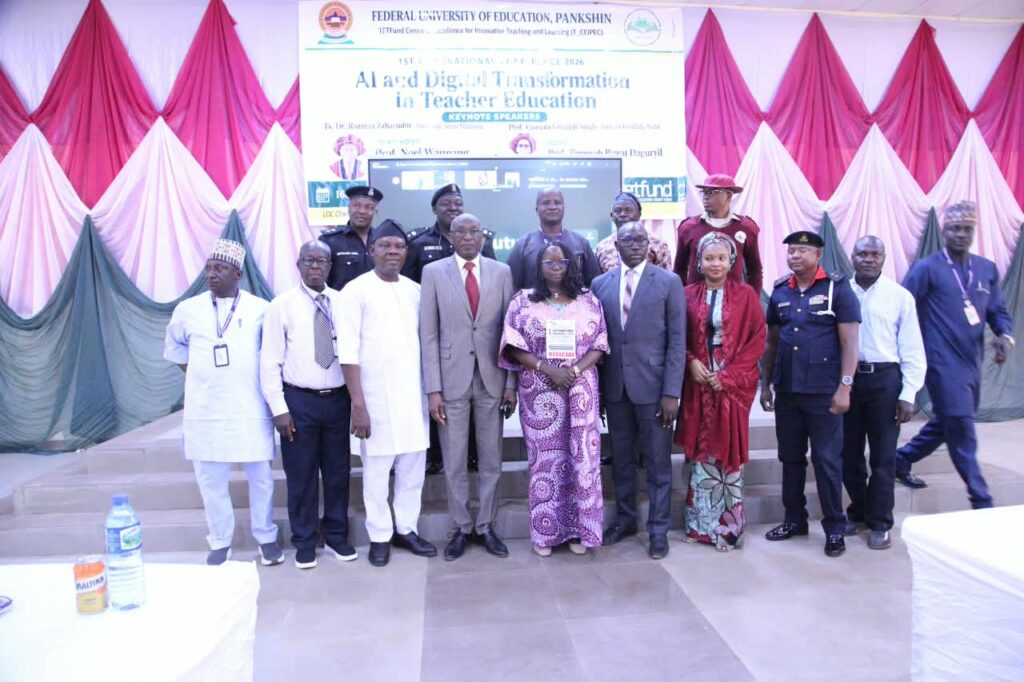
Participants noted that while AI has gained acceptance across academic disciplines, its effective integration into education remains constrained by poor electricity supply, inadequate internet connectivity, high data costs, limited digital devices and insufficient teacher training.
The communiqué, signed by Prof. Jere Ndazhaga, Chairman of the Local Organising Committee, and Prof. Emmanuel C. Hemba, its Secretary, stressed that AI should complement rather than replace teachers’ professional judgement, creativity and human empathy.
It also warned against overdependence on AI, highlighting concerns around academic integrity, data privacy, copyright, cultural ownership, fairness and inaccurate or biased content.
The conference consequently recommended integrating AI literacy and subject-specific digital competencies into teacher education curricula, alongside continuous professional development for educators.
It further urged government and relevant institutions to invest in reliable electricity, internet access, digital devices and maintenance, particularly in rural and underserved schools, while promoting offline, low-bandwidth and solar-powered solutions.
Participants also called for clear institutional policies to regulate responsible AI use, protect indigenous knowledge and ensure transparency in AI-assisted assessment.
The communiqué further advocated stronger research, inter-institutional collaboration and partnerships among government, educational institutions, industry, libraries and local communities to ensure that technology investments translate into improved learning and employment opportunities.
As part of the implementation framework, T_CEIPEC was urged to circulate the communiqué to TETFund, the Federal Ministry of Education and relevant regulatory bodies, while institutions were encouraged to establish working groups on AI literacy, infrastructure and policy.
The Centre was also tasked with following up on pilot and empirical studies to test proposed AI tools and frameworks, with progress on the resolutions expected to be reviewed at its next conference.
Participants appreciated TETFund for establishing and supporting the Centre, as well as the university management, conference organisers, presenters and other contributors for the successful hosting of the event.
The conference reaffirmed the need for an inclusive, ethical and context-driven approach to AI adoption in teacher education, with human expertise remaining central to the future of teaching and learning.