

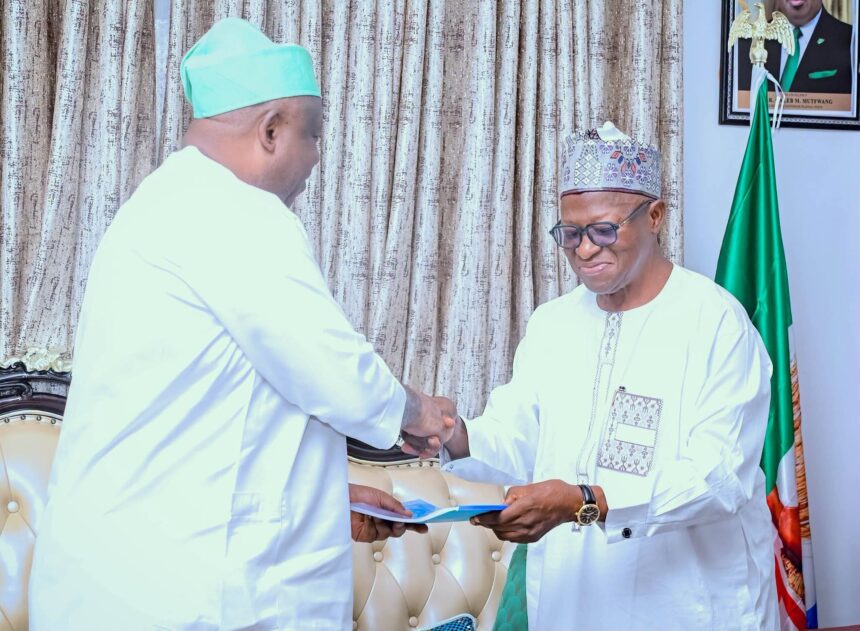
Plateau State Governor, Barr. Caleb Manasseh Mutfwang, has reaffirmed his administration’s unwavering commitment to achieving lasting peace through inclusive dialogue, institutional reforms, and strengthened collaboration with the Federal Government following the submission of a comprehensive report by the strategic committee constituted after the state’s high-level engagement with President Bola Ahmed Tinubu.
Receiving the report at the Old Government House, Rayfield, Jos, Governor Mutfwang described the document as a strategic roadmap that would guide informed dialogue and practical interventions aimed at addressing the complex security and socio-political challenges confronting Plateau State.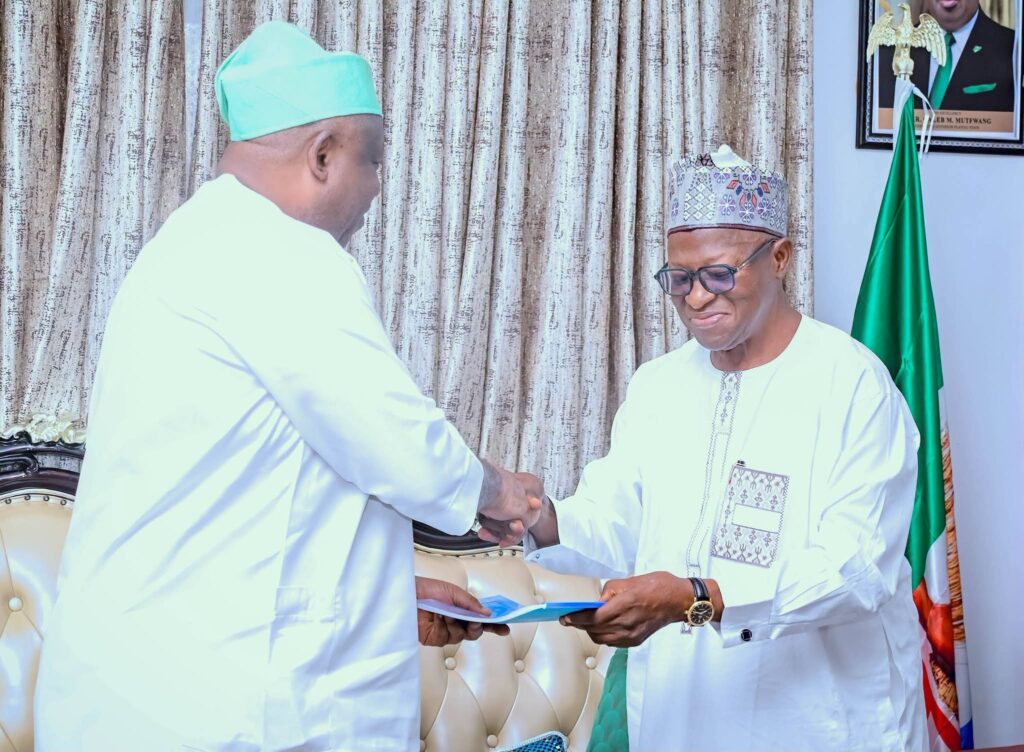
The committee, chaired by former Plateau State Governor, Senator Joshua Dariye, was established to harmonize issues raised during the Plateau State delegation’s visit to President Tinubu, develop a comprehensive engagement agenda with the Presidency, identify priority areas requiring Federal Government intervention, and recommend sustainable measures to promote peace, security, social cohesion, and development.
Governor Mutfwang disclosed that President Tinubu demonstrated genuine concern for Plateau State during the delegation’s visit and specifically directed the state to intensify efforts toward restoring enduring peace.
“When we visited Mr. President, it was evident that he has a genuine concern for Plateau State. That is why he gave us clear marching orders to reignite and reinvigorate the search for lasting peace on the Plateau,” the Governor said.
He explained that widespread misrepresentation of the purpose of the presidential engagement in some quarters necessitated the establishment of the committee to provide factual clarity and foster a common understanding of the issues affecting the state.
“The clarity provided by this committee will serve as a solid foundation for the critical conversations we must continue to have as a people,” he added.
Governor Mutfwang commended traditional rulers, political leaders, religious leaders, and community stakeholders across ethnic and religious divides for sustaining dialogue in an atmosphere of mutual respect rather than confrontation, describing their collective commitment as indispensable to preserving Plateau’s social fabric.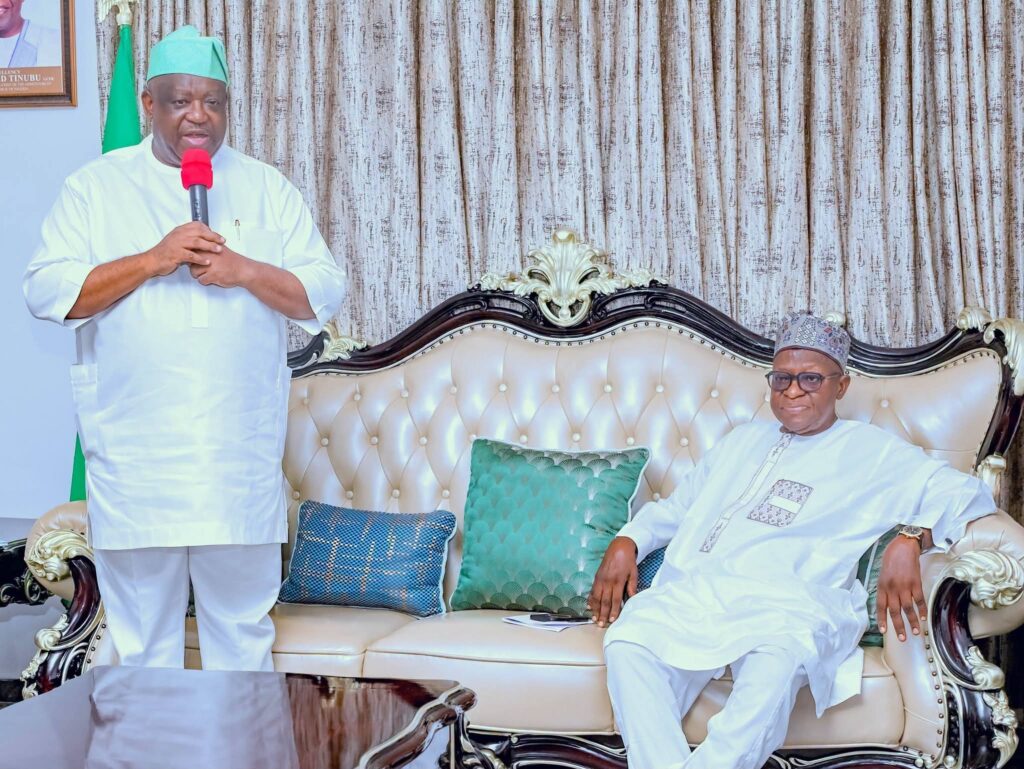
To further demonstrate his administration’s commitment to inclusiveness, the Governor announced that the report would be presented to a broader Plateau stakeholders’ assembly to ensure wider participation and ownership of the peace-building process.
“Those who accompanied us to the Presidential Villa do not represent the entirety of Plateau. Many who were unable to make the trip also have valuable perspectives that deserve to be heard. We must therefore create an enabling environment where every interest group has a voice at the discussion table,” he emphasized.
Earlier, Chairman of the Committee and former Governor of Plateau State, Senator Joshua Dariye, said the committee’s assignment extended beyond administrative responsibility and directly concerned the protection of lives, the safety of communities, and the pursuit of enduring peace across the state.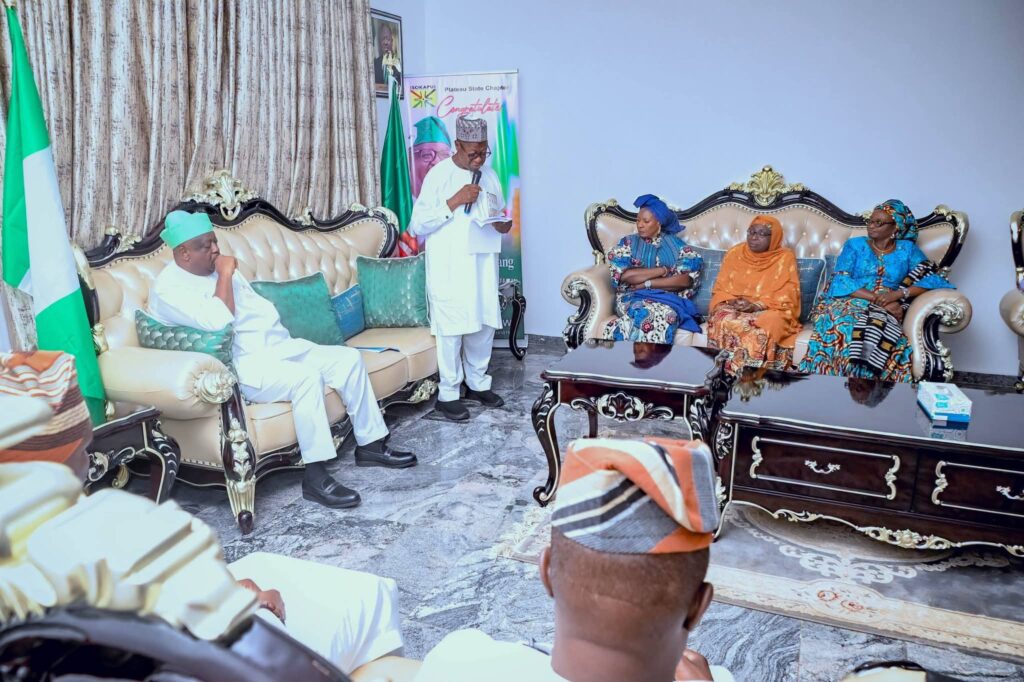
He disclosed that the committee produced a comprehensive two-volume report containing detailed analyses, key findings, implementation frameworks, and practical recommendations for government action.
According to Dariye, the peace and security challenges facing Plateau State are multidimensional, historical, layered, and dynamic, and therefore cannot be attributed to a single factor.
The committee observed that although Plateau State possesses numerous reports, policy documents, gazettes, peace initiatives, and recommendations, the major challenge has remained inadequate implementation, weak institutional support, inconsistent follow-up, personnel discontinuity, and insufficient accountability.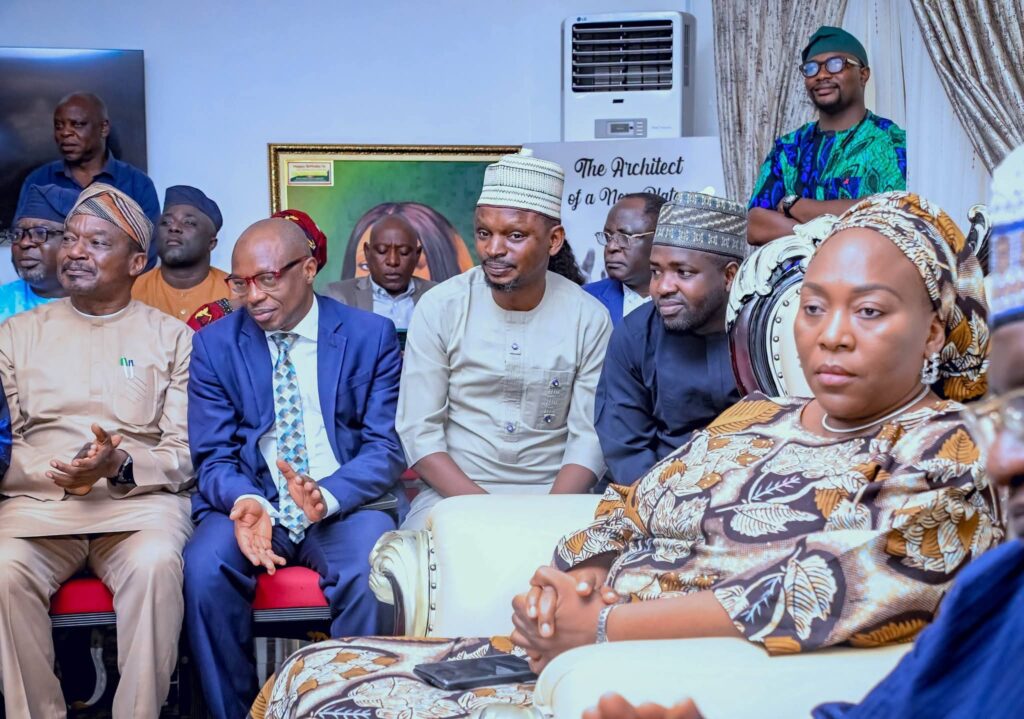
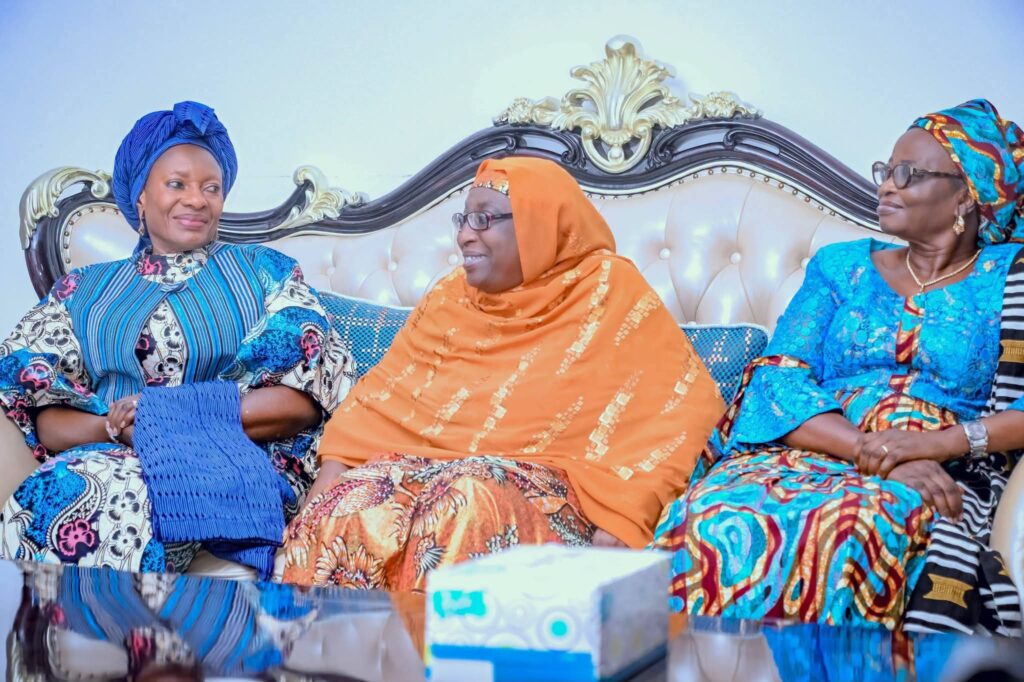
Among its recommendations, the report proposed a comprehensive stabilization and recovery framework that extends beyond military responses to include the protection of vulnerable communities, support for internally displaced persons, reconstruction of affected settlements, livelihood restoration, trauma healing, youth empowerment, women’s participation, interfaith collaboration, traditional conflict mediation, and education.
Dariye also stressed the importance of strategic communication in reshaping public perception of the state.
“Plateau State must be deliberate in telling its own story, correcting distorted narratives, showcasing government efforts, and transforming its image from one defined by conflict and crisis to one anchored on peace, resilience, justice, hospitality, investment, tourism, and opportunity,” he said.
The submission of the report underscores the Mutfwang administration’s commitment to evidence-based policymaking, inclusive consultations, and institutional solutions rather than reactive measures. It further reflects the government’s resolve to achieve sustainable peace while positioning Plateau State as a secure destination for investment, economic recovery, and strategic national partnership.